
Insulation of gas flues and industrial ventilation
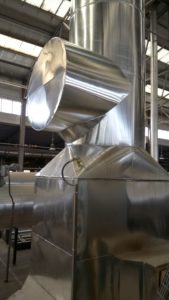 Reducing the use of electricity and energy resources is one of the necessary conditions for the successful development of the enterprise. A major role in the issue of energy efficiency is played by technical and industrial isolation.
Thermal insulation of gas ducts and industrial ventilation ensures the preservation of thermal energy, reduction of energy costs, keeps metal structures from condensation and formation of corrosive acids, and ensures long-term use of equipment. Most technological processes are accompanied by the transfer of air, dust or any other gases. Streams of hot gases that are fed or discharged through gas ducts in dryers or braziers carry a large amount of heat energy, which is subject to regeneration. The gases that travel through the flues can contain corrosive agents. To prevent the condensation of gases with subsequent corrosion, it is necessary to insulate the flue.
Significant role insulation plays in the system of industrial ventilation and air conditioning
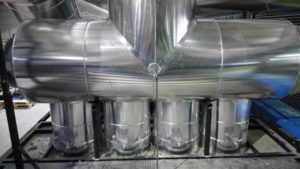 Significant role insulation plays in the system of industrial ventilation and air conditioning. In this area, the main tasks are: thermal insulation, fire protection systems and sound insulation. Not insulated ventilation pipes, in contrast to insulated, on its internal surface collect condensate. It can and, most likely, will leak through loosely fitted joints and moisten floors and walls. This can lead to the formation of mold and violation (and in the worst case – and collapse) of the structures.
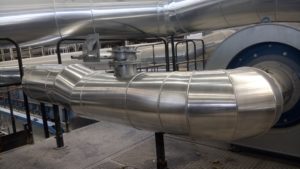 Any modern industrial production faces the problem of energy costs. The use of correct and high-quality thermal insulation can reduce energy costs and save fuel resources. Thermal insulation ensures the safety of workers, which is another proof of its effectiveness.